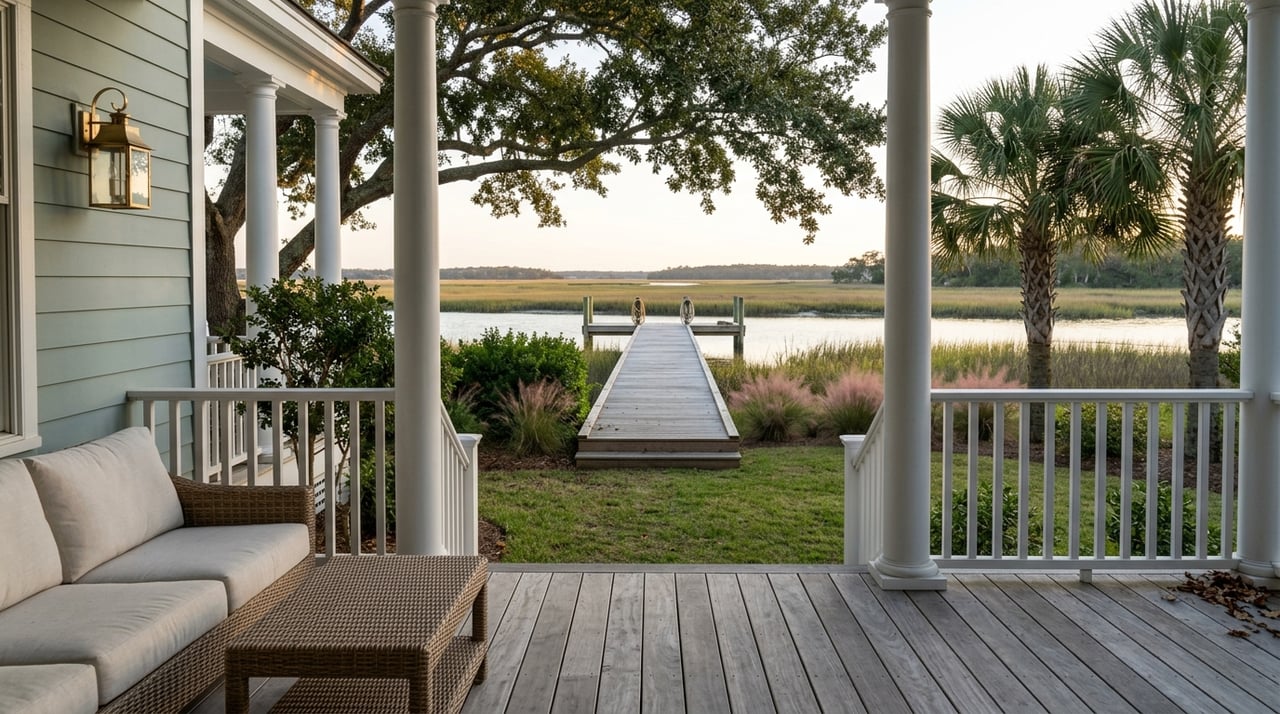
If your idea of luxury is less about formality and more about how you live every day, creekside living on James Island deserves a closer look. Here, water is not just something you visit on the weekend. It shapes the view, the pace, and often your daily routine. If you are thinking about buying near the marsh or along a tidal creek, this guide will help you understand both the appeal and the practical details. Let’s dive in.
Why James Island Creekside Living Feels Different
On James Island, creekside living is tied to the island’s natural geography. The Town of James Island describes the area as nestled among Charleston Harbor and the Stono and Folly Rivers, with scenic marsh views and mature trees that define the setting.
That matters because life near the water here is not centered on one marina or one waterfront district. Instead, it is woven into the island itself through tidal marshes, river edges, and creek systems that make the water feel like part of the neighborhood fabric.
Charleston’s floodplain resources also identify the Stono, Wappoo, James Island, and Church Creek systems, along with smaller tidal creeks, as local flood sources. In simple terms, the same water that creates the beauty and lifestyle also plays a real role in how the island is managed.
Everyday Water Access on James Island
One of the biggest draws of creekside living on James Island is how easy it can feel to get outside and enjoy the water. For many buyers, that means less of a special-occasion boating lifestyle and more of an everyday Lowcountry rhythm.
James Island County Park is a strong example of that lifestyle in action. The park offers saltwater fishing and crabbing, miles of paved trails, and rentals for bicycles, pedal boats, kayaks, and stand-up paddleboards.
The park also includes a campground with 124 sites and 10 vacation cottages along the Stono River marsh. That setup speaks to the kind of relaxed, water-connected environment many buyers are looking for when they picture life on James Island.
What daily life can look like
Based on the island’s access points and park amenities, creekside living here often supports simple, repeatable routines that feel special without being complicated.
You may picture:
- Morning paddles before work
- Evening walks with marsh views
- After-work crabbing or fishing
- Weekend boat outings from nearby public landings
- Quick outdoor breaks that keep you connected to the water
That is a big part of James Island’s appeal. The luxury is often found in convenience, scenery, and the ability to enjoy the outdoors without planning your whole day around it.
Public Boat Landings and Local Recreation
Charleston County Parks says it maintains 19 public boat landings countywide, and two of the higher-traffic options on James Island are Battery Island/Sol Legare and Riverland Terrace. For buyers who want practical water access nearby, that county network is an important part of the story.
These launch points help support boating, fishing, and casual time on the water close to home. They also reinforce the idea that James Island’s creekside lifestyle is about access and flexibility, not just private waterfront amenities.
Still, it is important to approach public water access with realistic expectations. Charleston County Parks notes that boat landings are self-managed and not staffed at all times, and tides, currents, and low-tide conditions can create serious drop-offs.
Fishing and crabbing rules to know
If you plan to fish or crab in tidal creeks around James Island, local rules matter. James Island County Park notes that the South Carolina Department of Natural Resources requires a saltwater fishing license to fish the tidal creeks.
SCDNR also says a recreational saltwater license is required even for saltwater fishing from shore and for harvesting oysters, clams, shrimp, or crabs, unless a stated exception applies, such as licensed charter vessels or licensed public piers. If this lifestyle is part of your buying decision, it helps to understand those basics early.
The Beauty and Responsibility of Creekside Ownership
Creekside homes on James Island can deliver some of the most memorable settings in the Charleston area. Marsh light, changing tides, and open sky create a sense of calm that is hard to duplicate.
At the same time, buying near tidal water comes with responsibilities that should be part of your decision from the start. This is not a downside so much as a reality of owning in a beautiful, water-shaped environment.
The Town of James Island says the Town, Charleston County, and the City of Charleston share responsibility for stormwater management in the James Island Creek watershed. The town also says they are required to monitor bacteria levels and develop an action plan, with monthly sampling and additional testing after heavy rains.
That tells you something important about the area. Creekside living here is actively managed, not left to chance.
Stormwater, Water Quality, and Resilience
The City of Charleston notes that it maintains more than 20 miles of drainage ditches around James Island. That may not sound glamorous, but it is a key part of how the island supports homes, roads, and neighborhoods in a low-lying coastal setting.
The Town of James Island also points to septic concerns in the James Island Creek watershed. According to the town, failed septic systems have been a major concern, most homes in that watershed are on sewer, some properties remain on septic, and Clark’s Point has been the most significant septic-heavy area.
The town further states that private septic inspections are required every three years in that area and describes an ongoing sewer-expansion effort for the creek watershed. For a buyer, this means utility infrastructure is not just background information. It is part of smart due diligence.
Why this matters to buyers
If you are comparing creekside homes, the lifestyle questions and property questions need to go together.
You will want to look closely at:
- Flood exposure
- Elevation
- Sewer versus septic status
- Drainage conditions around the property
- Current and future water-access possibilities
- Maintenance needs tied to a creekfront setting
These factors do not erase the appeal of creekside living. They simply help you understand what ownership really looks like on James Island.
Flood Maps and Property Planning
Charleston’s floodplain resources say flood hazards in the area include rivers, riverine flooding on the Wappoo and James Island Creek systems, and tidal creeks. The city also directs residents to FEMA’s Map Service Center for current flood-insurance maps and provides WaterWise flood-preparedness resources, interactive maps, and water-management information.
For buyers, this means flood planning should be part of the conversation early, not something you leave until the end of a transaction. A home’s setting, elevation, and mapped flood information can all affect how you evaluate the property.
This is especially true if you are drawn to a home primarily for its marsh or creek frontage. The view may be the first thing that captures your attention, but the long-term fit depends on understanding the site as well as the structure.
Docks, Piers, and Creekfront Improvements
For some buyers, the dream includes a private dock, a small pier, or shoreline improvements that make water access easier. On James Island, that kind of possibility often requires more than a simple contractor quote.
South Carolina’s Department of Environmental Services says any construction, dredging, filling, or other alteration below the mean high water line in navigable waters requires a permit. Its guidance also notes that tidal areas fall under the direct permitting jurisdiction of the Office of Ocean and Coastal Resource Management.
The OCRM policy manual further states that docks and piers in the coastal zone require permit review and must not interfere with navigation or restrict waterflow. So if you are considering a creekfront property, it is wise to think beyond the house itself.
Questions to ask before you buy
A creekfront purchase often calls for deeper property-level review. Depending on the home and lot, helpful questions may include:
- Is the property on sewer or septic?
- What does current flood mapping show?
- Are there existing dock or pier structures?
- What approvals might be needed for future shoreline work?
- How might water access improvements affect timeline and cost?
This kind of planning helps you align your expectations with the property’s real potential.
What Everyday Lowcountry Luxury Really Means
On James Island, everyday luxury often looks quiet and natural. It may mean watching the tide shift from your porch, launching a kayak nearby, or ending the day with a marsh view instead of a crowded schedule.
What makes this lifestyle special is that it feels livable. You are not buying into a fantasy version of waterfront life. You are stepping into a place where scenic water, outdoor recreation, and neighborhood life meet in a way that feels grounded and distinctly Lowcountry.
The other side of that luxury is stewardship. Creekside ownership here works best when you appreciate both the beauty and the systems that support it, from stormwater management to water-quality monitoring to careful planning for future improvements.
If that balance sounds appealing, James Island can offer a rare blend of ease, access, and long-term lifestyle value. And if you want help evaluating which creekside opportunities fit your goals, Lisa Nicole Thornton offers personalized guidance rooted in local market knowledge and concierge-level service.
FAQs
What does creekside living on James Island usually mean?
- Creekside living on James Island usually means daily proximity to tidal marshes, river edges, and creeks, with lifestyle benefits such as views, paddling, fishing, crabbing, and access to nearby public launch points.
What water activities are available near James Island creekside homes?
- James Island County Park offers saltwater fishing, crabbing, kayak rentals, stand-up paddleboards, pedal boats, and paved trails, while nearby public boat landings support boating and other water-based recreation.
What should buyers know about flood risk for James Island creekside properties?
- The City of Charleston identifies rivers, the Wappoo and James Island Creek systems, and tidal creeks as local flood hazards, so buyers should review flood maps, elevation, and site conditions early in the home search.
What should buyers know about septic and sewer on James Island?
- The Town of James Island says most homes in the James Island Creek watershed are on sewer, but some properties remain on septic, making sewer-versus-septic status an important part of property due diligence.
What should buyers know about docks and piers on James Island creekfront lots?
- South Carolina permitting rules say construction or alteration below the mean high water line in navigable waters requires review, and docks and piers in tidal coastal areas are subject to OCRM permit review.
Do you need a license to fish or crab in James Island tidal creeks?
- Yes, James Island County Park and SCDNR say a recreational saltwater license is generally required for saltwater fishing in tidal creeks and for harvesting oysters, clams, shrimp, or crabs, unless a stated exception applies.
