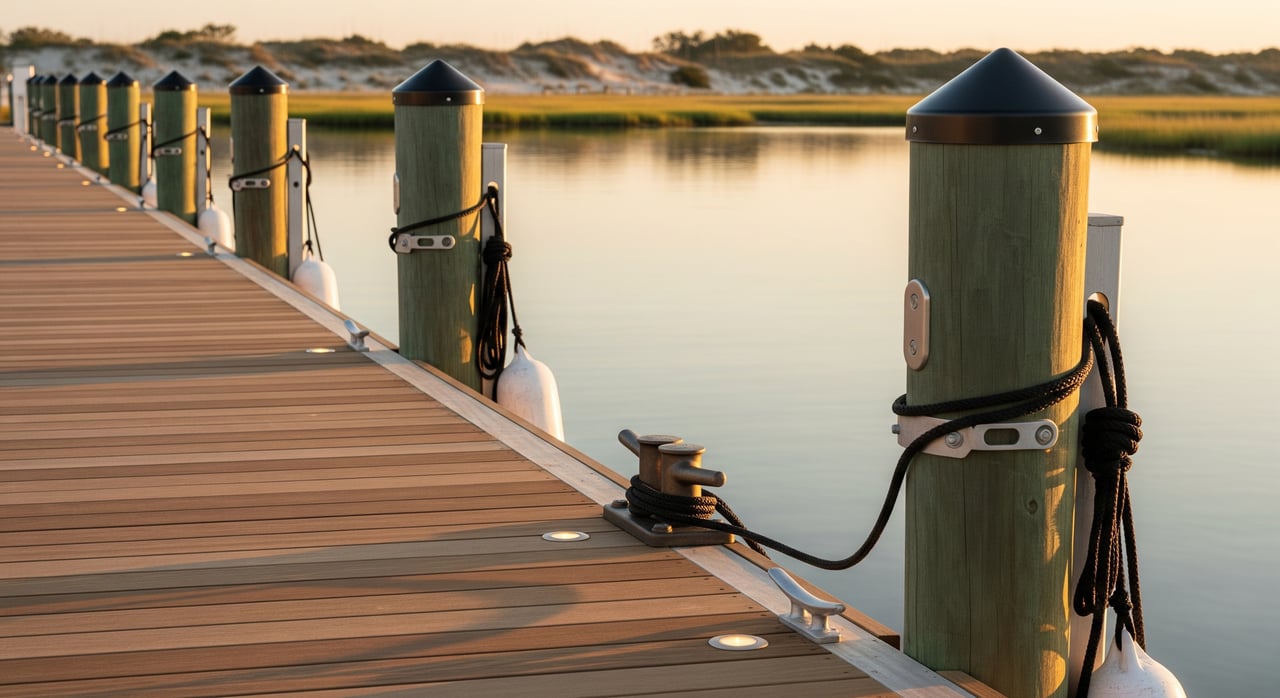
Salt, sun, tides, and storms are part of life on Isle of Palms, and they can be tough on a dock. If you own or plan to buy a waterfront home, your dock’s condition and documentation can affect safety, value, and insurability. In this guide, you’ll learn what to inspect seasonally, when permits are likely required, and how to keep records that help with insurance and resale. Let’s dive in.
Seasonal dock inspections on Isle of Palms
Regular checks help you spot minor issues before they become costly problems. Plan a quick visual check after winter, before and after hurricane season, and after any major storm or boat strike. Pair that with a professional inspection once a year.
Homeowner visual checks
Use this quick checklist monthly in summer, at least quarterly otherwise, and after storms:
- Structural elements
- Decking boards: look for rot, loose or split boards, and sagging.
- Support framing and joists: check for sag, decay, and missing fasteners.
- Pilings: check for lateral movement, cracking, hollow spots, erosion at the base, and marine borer damage.
- Fasteners and connectors: look for heavy corrosion, missing bolts, and rusted hardware at pile-to-cap and joist connections.
- Safety and usability
- Railings, ladders, steps: confirm all are secure with no loose posts.
- Lighting and electrical: verify GFCI protection, weatherproof disconnects, corrosion-free fixtures, and no frayed wiring.
- Ladders, cleats, bumpers, fenders: ensure secure attachment and good condition.
- Boatlift and davit: check cables, straps, motors, sheaves, and switches, and listen for unusual noises.
- Environmental
- Shoreline and pilings: look for erosion and scour.
- Water level and channels: note shifting conditions that could affect pier length or exposure.
- After storms
- Impact and displacement: look for boat strikes, floating debris damage, loosened fasteners, displaced pilings, or washed-out shoreline.
Professional inspections
Schedule a professional check annually and after major storms. A marine contractor or qualified inspector should:
- Test pile integrity and evaluate scour.
- Inspect fasteners and connectors for corrosion and proper tension.
- Probe decking and hidden framing for decay.
- Have a licensed electrician inspect all dock power.
- Review boatlift loads and piling capacities.
- Provide a written report with prioritized repairs, cost estimates, and photos.
Common maintenance and preventive care
Proactive upkeep reduces risk and supports insurance claims and resale. Focus on these items:
- Routine cleaning to remove algae and debris that create slip hazards and speed decay.
- Refinish or seal decking and stair treads per material recommendations.
- Replace corroded fasteners with marine-grade stainless steel or hot-dip galvanized hardware specified by a marine contractor.
- Replace damaged or soft pilings promptly to prevent larger failures.
- Maintain any cathodic protection, and check for stray current corrosion.
- Service boatlifts on the manufacturer’s schedule, replacing straps and cables proactively.
- Trim vegetation and maintain shoreline stabilization to reduce scour.
Permits and when to ask first
On Isle of Palms, dock work can involve city, county, state, and federal rules. Before planning any project, check requirements with:
- City of Isle of Palms Building and Planning Department.
- Charleston County building, zoning, and floodplain management.
- South Carolina Department of Health and Environmental Control, Office of Ocean and Coastal Resource Management (SCDHEC-OCRM).
- U.S. Army Corps of Engineers (USACE), Charleston District.
- FEMA and the National Flood Insurance Program (NFIP) for flood zone and insurance considerations.
- South Carolina Department of Natural Resources (SCDNR) for navigation and resource considerations.
Work that usually needs authorization
Ask about permits early if your project includes:
- New docks or substantial reconstruction that replaces most of a structure or changes the footprint.
- Expansion or increase in footprint, including added length, width, boat houses, or finger piers.
- Work on submerged lands or tidal wetlands, such as new pilings or fill waterward of the mean high water line.
- Dredging or relocating boat channels, or placing dredged material.
- Bulkheads or shoreline stabilization that installs, replaces, or substantially alters shoreline armoring.
- Boatlift or davit replacements that enlarge structures or affect tidelands or navigation.
Maintenance that often does not
Routine in-kind repairs that do not change the footprint are often treated as maintenance. Examples include:
- Replacing decking boards with the same size and material.
- Swapping corroded hardware with similar marine-grade fasteners.
- Isolated piling repairs that do not add piles or change alignment.
Always confirm the definition of maintenance with local officials and SCDHEC-OCRM for your specific situation. Thresholds for what counts as substantial repair can vary, so get a written determination if in doubt.
Practical permitting tips
- Start local: even if state or federal permits are not needed, city or county building codes and floodplain rules may still apply.
- Expect coordination: many projects require both OCRM approval and a USACE permit, and some use a joint application.
- Use pre-application meetings for larger or borderline projects to clarify scope, timelines, and documentation.
Insurance and risk basics for docks
Not all policies treat docks the same way. Understanding coverage helps you avoid surprises at claim time.
- Standard homeowners policies vs. flood insurance
- A standard policy may cover certain named perils, but water damage and storm surge are often limited or excluded without flood insurance.
- NFIP flood insurance focuses on buildings, and coverage for docks or piers varies by policy. Mortgage lenders in Special Flood Hazard Areas may require flood coverage.
- Marine or dock endorsements
- Some insurers offer endorsements or separate policies for docks, boatlifts, and marine equipment tailored for coastal properties.
- Deductibles and exclusions
- Coastal policies often have wind or hurricane deductibles based on a percentage of dwelling value. Storm surge may be excluded unless flood coverage is in place.
- Insurer requirements
- Carriers may require documented maintenance, post-storm professional inspections, or construction standards like corrosion-resistant hardware and elevation clearances.
Documentation buyers and insurers expect
Good records reduce friction with lenders and carriers, and they build confidence with buyers.
- Permits and approvals from the city, county, SCDHEC-OCRM, and USACE, plus final inspections and proof of any permit conditions met.
- As-built drawings and surveys that show location, dimensions, property lines, and the mean high water or ordinary high water line.
- Contractor records, including licenses, insurance certificates, scope-of-work contracts, and final invoices.
- Manufacturer data for lifts and davits, including model and serial numbers, manuals, and service records.
- Time-stamped photos before, during, and after work.
- Professional inspection reports, including annual checks and post-storm assessments.
- Materials and maintenance logs that note decking and pile materials, treatments, sealant dates, and fastener types.
- Elevation or flood documentation, such as FEMA elevation certificates when available.
Why records matter in a sale
Clear documentation supports accurate disclosures and helps buyers and lenders verify condition and compliance. Missing permits or improper repairs can delay closing, trigger insurer denials, or require retroactive permitting. Well-documented maintenance makes replacement cost estimates easier and can reduce claim disputes.
Step-by-step next moves
Before any work
- Contact Isle of Palms Building and Planning and Charleston County permitting to confirm submittal requirements and recent ordinance changes.
- Contact SCDHEC-OCRM if any work touches tidal waters, submerged lands, or marsh. Ask if a joint permit or letter of authorization is required.
- Contact USACE Charleston District about federal permits for navigable waters and dredge or fill activities.
- Verify your flood zone and obtain elevation certificates if the property is in a Special Flood Hazard Area.
- Get multiple bids from licensed marine contractors with local experience, and verify their insurance and references.
Routine maintenance vs. larger projects
- For small in-kind repairs, document the work and keep receipts. Confirm in writing with local officials or SCDHEC-OCRM whether a permit is required.
- For projects that change pile count or location, alter the footprint, add structures, dredge, or modify the shoreline, plan for a formal permit process that may take weeks to months.
Recordkeeping checklist
- Copies of all permits and final sign-offs.
- Professional inspection reports from the past 1 to 3 years.
- Contractor contracts, licenses, and proof of insurance.
- Photo documentation of conditions and work completed.
- Manufacturer documentation for mechanical equipment.
- Maintenance log with dates and descriptions.
- Flood elevation certificates and summaries of insurance policies.
Final thoughts
On Isle of Palms, a well-maintained, well-documented dock is more than a convenience. It is an asset that supports safe enjoyment, smoother insurance claims, and stronger resale value. If you stay on a seasonal inspection routine, check permits before you build or replace, and keep clear records, you will protect your investment and avoid preventable delays.
If you would like a local perspective on dock condition, permitting, and how documentation plays into pricing and negotiation, schedule a personalized consultation with Lowcountry Luxury Properties. We are happy to coordinate the right inspections and help you plan a clear path to closing.
FAQs
Do I need a permit to replace rotted deck boards on an IOP dock?
- In-kind board replacement that does not change the dock footprint is often treated as maintenance, but you should verify with local building officials and SCDHEC-OCRM for your specific situation.
After a hurricane damages my dock on Isle of Palms, can I rebuild immediately?
- Emergency stabilization may be allowed, but full reconstruction often requires permits. Document damage with photos, contact local officials and your insurer, and secure authorization before major repairs.
Will my homeowner’s insurance cover dock damage from storm surge on IOP?
- Coverage varies by policy. Standard policies may cover some perils, while flood or storm surge is usually covered only by separate flood insurance. Consider marine endorsements when available.
Who should inspect a dock when I buy or sell on IOP?
- A marine contractor or structural inspector with coastal dock experience is recommended. Some home inspectors perform visual checks, but specialized marine inspections are better for pilings, scour, and boatlifts.
