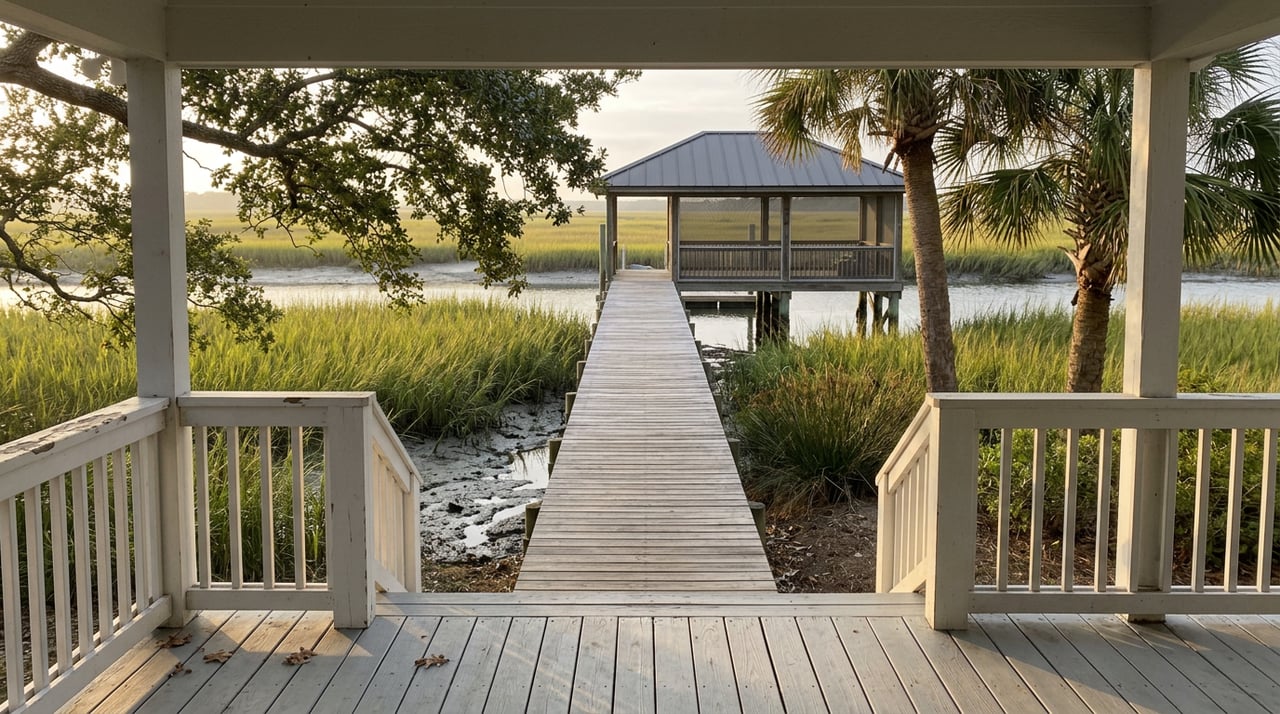
"Oysters should really be the Lowcountry mascot," said Kim Morganello, an ecological design leader with the engineering firm Weston & Sampson, standing near the boat ramp at Folly River Park on a Friday afternoon in mid-August. She was talking about the modest, unglamorous stretch of marsh edge the city had just spent an afternoon reinforcing with bagged oyster shells and wire cages. Most people walking their dog past that stretch of Center Street have no idea it exists yet, or what problem it was built to solve.
If you've lived on Folly long enough to have an opinion about beach renourishment, you already know the island fights erosion on its ocean side. Sand gets pumped through pipes near The Washout, groins get rebuilt, and every few years there's a new round of dredging that everyone talks about at Bert's Market. That's the erosion story most residents carry around in their heads. It's not the whole story, and the project that went into the water on August 14 is proof of it.
Two Different Erosions, Two Different Fixes
The Atlantic side of Folly loses sand to wave action and to the Charleston jetties, which block the natural north-to-south flow that used to replenish the beach. That's the erosion everyone knows. The back side of the island, where Folly River Park sits along Center Street right as you drive onto the island, has a different problem entirely. Tidal movement in the Folly River and boat wake from the traffic at the public boat ramp are wearing away the marsh edge, not the beach.
Morganello put it plainly to a Live 5 News crew on site for the installation: "The Folly River has a lot of energy as the tide comes and goes, and there's also a lot of boat traffic with the boat ramp right next to the park. This living shoreline is going to create a more protected edge between the Folly River and the marsh." Folly Beach mayor Chris Bizzell described the same problem from the council's side of the table: "This is attacking the marshfront erosion issues we're seeing. We get a lot of a tidal erosion and boat wakes."
That distinction matters if you own property, or plan to, anywhere along the river side of the island rather than the beach side. The fix for one erosion problem has nothing to do with the fix for the other.
What Went Into the Water
The city, in partnership with Weston & Sampson and a firm called Shoreline Restoration Group, timed the installation to coincide with low tide on August 14, running from 3 to 5 p.m. at Folly River Park, 58 Center Street. It was a free, drop-in event. Anyone who wanted to help met at the Folly Boat Ramp and was guided under the Folly River Bridge to the site itself.
Crews used three approaches at once, layered together rather than relying on a single fix:
- Oyster castles: stacked, interlocking concrete blocks shaped to encourage oyster growth
- Bagged oyster shells: mesh bags of shell material that give new oyster spat something to attach to
- Manufactured wire reefs: wire-framed structures that do similar work in areas where bagged shell alone won't hold
Native spartina grass rounds out the planting, the same marsh grass that already lines most of the Folly River's edges naturally.
The idea behind combining all three is that a living shoreline gets stronger over time instead of degrading the way a concrete seawall does. Bizzell made that comparison directly: "It sustains itself and will continue to spread. So it's a long-term natural solution that I think is a really good alternative to hard structures."
Why This Particular Park
Folly River Park wasn't chosen because it needed a facelift. It was chosen because it's a working example of the exact conditions a lot of river-facing property on Folly deals with every day: heavy tidal flow, constant boat traffic from the adjacent ramp, and a marsh edge that's been quietly losing ground. The city has been planning this specific installation since 2024, and it's part of the broader Folly Beach 2050 resilience plan, the framework the city uses to think about sea level rise and shoreline management over the next several decades.
Put another way, this isn't a one-off beautification project tucked into a park upgrade. It's a prototype, built in public, on a site picked specifically because its erosion problem looks like the problem a lot of homeowners along the river already have.
The Part That Matters If You Own on the River
Here's what separates this project from a typical parks department improvement: it's designed to be copied.
South Carolina opened a regulatory pathway in 2022 that lets private property owners install living shorelines on their own marsh-front land, using the same basic materials the city just put in the water at Folly River Park. Living shorelines themselves aren't new to the state, Morganello noted they've been used in South Carolina for close to two decades, but the option to do this on private residential property is comparatively recent, and most homeowners along the Folly River have likely never heard of it.
Bizzell was direct about the intent behind building a public model first. "It's going to be our model, and what we want to do is enable homeowners on the marshfront to be able to implement this as part of their erosion protection in front of their own homes," he said. "As this builds out, we're looking to do mini-grants, that type of thing to make it easier for the homeowner to go out and put something similar up in place."
No mini-grant program exists yet. What exists right now is a finished, visible example anyone can walk to, look at, and ask questions about before that kind of assistance becomes available. If you own marsh-front property on the river side of the island and have been quietly watching your shoreline recede a little more every year, this is the closest thing to a preview you're going to get before the city formalizes any homeowner assistance.
What to Watch For Next
The materials are in the water, but the project itself is a slow one by design. Experts monitoring the site expect physical changes to take up to two years to fully show. The more encouraging marker to watch for is sooner: new oysters are expected to start growing on the installed materials by next summer.
That gives residents a reasonable, low-effort way to track it. If you're already someone who walks the dock at Folly River Park, or launches a kayak from the Folly Boat Ramp a few times a season, the next visible sign of progress is oyster growth on the castles and bagged shell sometime around next summer. Not a ribbon-cutting, not a press release, just spat showing up where there wasn't any before.
As Bizzell framed the larger point behind all of it: "We're trying to make sure that the island's not just good for us, but for future generations."
For an island where most conversations about erosion have historically centered on the beach, it's worth knowing that the same conversation is now happening, with real materials in the water, on the river side too. If you're curious how any of this intersects with owning property along Folly's marsh edges, from erosion exposure to the practical costs that come with river-facing land, our guide to the real cost of owning on Folly Beach digs into what that ownership actually looks like day to day.
If you're weighing what any of this means for a specific property, whether you already own along the Folly River or you're watching the Folly Beach market from a distance, Lisa Nicole Thornton at Lowcountry Luxury Properties tracks these kinds of local shifts as part of representing buyers and sellers here. Schedule a personalized consultation if you'd like to talk through what a project like this means for your own stretch of shoreline.
