Selling a historic home in downtown Charleston is not the same as listing a newer property across town. If you own a house with original windows, a piazza, old masonry, or other period details, the work you do before listing can affect both buyer appeal and local approval requirements. The good news is that you do not need to renovate away the home’s history to prepare it well. You need a smart plan that protects character, avoids missteps, and helps your home show beautifully. Let’s dive in.
Start With Historic Review Rules
Before you paint, replace, remove, or enclose anything on the exterior, confirm how your home is treated under Charleston’s preservation rules. In the city’s historic districts, the Board of Architectural Review, or BAR, reviews visible exterior alterations, renovations, new construction, and some demolitions.
That matters because approval requirements can change based on the property’s district and its historic rating. Charleston’s architectural inventory categories run from 1 to 4, and homes in categories 1 and 2 typically face the strictest review standards.
Know Your Home’s BAR Path
Some sellers assume minor exterior updates are harmless. In downtown Charleston, even items that seem simple can require review if they are visible from the public right-of-way.
For higher-rated historic buildings, the city notes that paint color changes, storm windows, additions, accessory buildings, demolition, and hardscaping may require BAR review. That is why it helps to identify your property’s district and likely review path before you build a pre-listing to-do list.
Staff Review vs. Full BAR Review
Not every request goes through a full board hearing. The city says some simpler items, such as painting, rot repair, and small modifications, may be reviewed by preservation staff.
Larger or more visible exterior changes may still need formal BAR approval. If you are unsure, checking with preservation staff early can save time and reduce last-minute surprises before you list.
Use a Repair-First Strategy
One of the clearest themes in Charleston’s preservation guidance is simple: repair first, replace only when necessary. That approach supports the home’s historic character and can also keep your preparation more focused and efficient.
The city specifically advises owners to repair historic building materials and elements whenever possible. If something truly cannot be repaired, the replacement should match the original in type, size, profile, and material.
Why Repair Often Helps Value
Buyers shopping for historic downtown Charleston homes are often drawn to original details. A careful repair plan helps preserve the features that make the home distinctive, rather than swapping them out for materials that may conflict with district standards.
Charleston’s guidance also notes that maintaining and repairing historic structures with appropriate materials and techniques can be more affordable and more sustainable than installing all-new replacement materials. For sellers, that can mean fewer unnecessary upgrades and a better presentation overall.
Protect Original Windows
Windows are one of the most important character features in a historic Charleston home. If your house still has original windows, they deserve extra attention during the prep process.
The city recommends repairing original windows whenever possible. If replacement is necessary, the replacement should match the original material and configuration, and exact replicas are preferred when components are beyond repair.
Avoid Incompatible Window Changes
Charleston’s guidelines are clear that aluminum or vinyl windows are not acceptable on historic residences in the historic districts. Simulated divided-lite windows are also not acceptable.
Storm windows may be allowed on a case-by-case basis, but they must fit within the trim. They are not allowed on Category 1 or 2 buildings, so this is another area where early review matters.
Preserve Piazzas and Porch Details
In Charleston, piazzas and porches are not just extras. They are often key design features that help define the home’s architecture and street presence.
The city treats these elements as character-defining features and advises repairing them wherever possible. If replacement parts are needed, they should match the existing design or the building’s period details.
Be Careful With Enclosures and Screening
Enclosing a piazza or porch is generally discouraged under the city’s guidelines. If screening is used, it should be removable and placed behind the columns and railings so the original features remain visible.
The same caution applies to decorative trim, brackets, door surrounds, and window pediments. These details should not be removed casually, especially when they help tell the story of the home.
Handle Masonry and Exterior Elements Thoughtfully
Historic brick, mortar, fencing, driveways, and visible equipment all affect curb appeal. They can also raise approval questions if changes do not match city guidance.
For masonry repairs, Charleston advises matching brick and mortar to the existing material. The city also warns against painting historic brick unless it was already painted and does not allow waterproof coatings on historic masonry.
Watch Fences, Hardscaping, and Equipment
The city considers some modern materials inappropriate in the historic districts. Chain-link, aluminum, vinyl, and PVC fencing are not appropriate.
Asphalt and plain poured concrete driveways are also not allowed. Visible HVAC units and similar mechanical equipment should be screened and placed away from the public right-of-way when possible.
Stage the Home Without Erasing Its Character
Once repair needs are addressed, staging should help buyers see both the space and the architecture. In a historic downtown Charleston home, the goal is not to make the house feel generic. It is to make it feel clear, bright, and easy to appreciate.
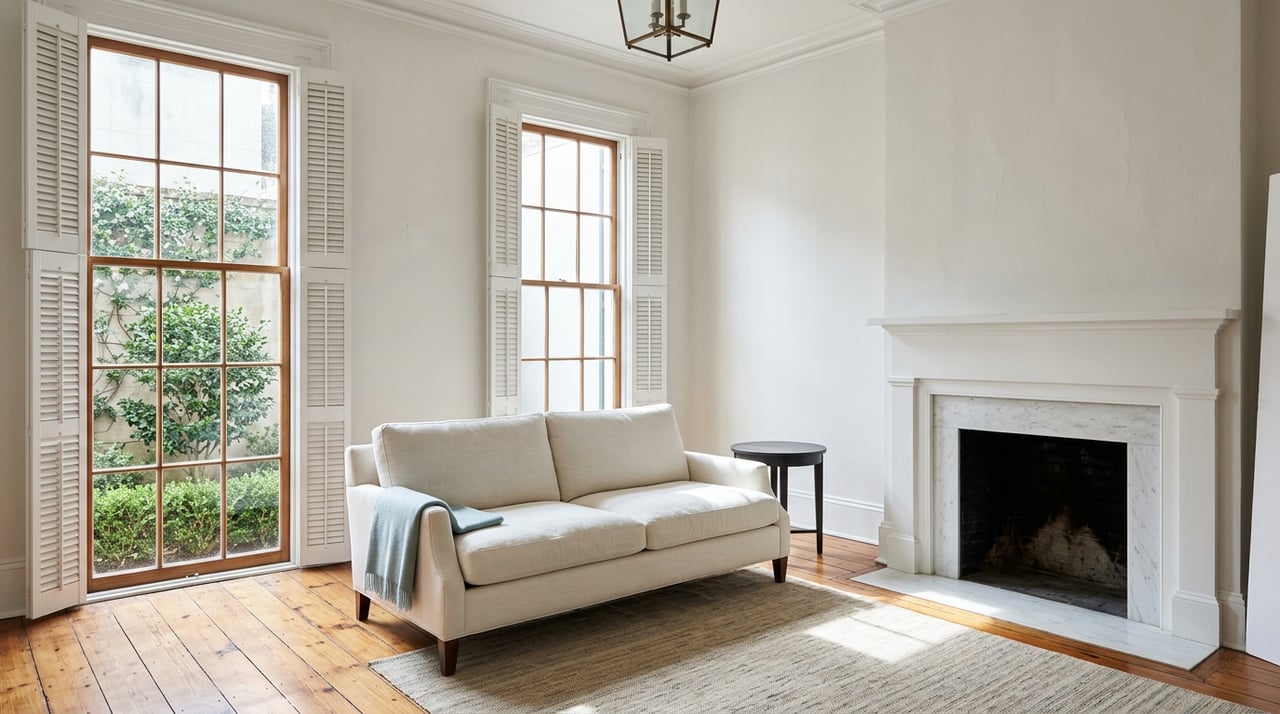
That usually means removing visual clutter, simplifying furnishings, and making sure original trim, stair details, fireplace surrounds, tall windows, and piazzas remain visible in person and in photos.
Focus on the Rooms Buyers Notice Most
According to the National Association of Realtors’ 2025 staging report, 29% of agents saw staged homes receive a 1% to 10% increase in dollar value offered. The same report found that 49% of sellers’ agents observed faster sales when homes were staged.
Buyers’ agents ranked the living room as the most important room to stage, followed by the primary bedroom and kitchen. They also rated photos, traditional staging, videos, and virtual tours as highly important.
Decluttering Still Matters
Even when a seller does not fully stage a home, decluttering and correcting visible property faults can make a real difference. That works especially well for historic homes, where selective, reversible improvements often make more sense than major cosmetic overhauls.
A clean and edited presentation helps buyers focus on scale, light, craftsmanship, and layout. In a historic property, those features often do much of the selling.
Build Time for Approvals
Timing matters when you are preparing a historic downtown Charleston home for sale. If you plan to complete exterior work before listing, make room in your timeline for review and approval.
The city’s Certificate of Construction Completion request form notes that projects in the Old City and Old & Historic Districts require BAR approval before the certificate can be issued. That means exterior work needing approval should never be treated as a last-minute task.
Start Earlier Than You Think
A rushed prep plan can create avoidable delays. If exterior items need staff feedback or formal review, starting early gives you more flexibility with contractors, photography, and launch timing.
A thoughtful timeline also lets you prioritize the work most likely to improve presentation while staying within preservation standards.
Prepare Disclosure Early
A polished home should still come with honest paperwork. In South Carolina, most residential sales require a Residential Property Condition Disclosure Statement before a real estate contract is formed.
The state form instructs owners to answer fully, honestly, and appropriately, and to attach documents when needed. That makes early preparation important, especially if your home has known repair history, older systems, or completed work that buyers may ask about.
Cosmetics Should Not Replace Transparency
Fresh paint and styling can help a home show well, but they should never be used to hide known issues. Buyers tend to gain confidence when a seller presents both the home and the paperwork in a clear, organized way.
For a historic home, that level of transparency often supports smoother negotiations and a more credible listing presentation.
A Smart Pre-Listing Checklist
If you want a simple way to think about the process, start here:
- Confirm the home’s historic district and BAR review level
- Ask preservation staff before changing visible exterior elements
- Create a repair-first punch list
- Preserve original windows, porches, and decorative details when possible
- Review masonry, fencing, hardscaping, and visible equipment with care
- Declutter and stage for photos without stripping away character
- Build approval time into your listing timeline
- Complete disclosure paperwork early and thoroughly
Balance Preservation and Market Readiness
The best historic-home prep plans in downtown Charleston do not chase a one-size-fits-all update list. They balance market readiness with preservation, helping your property look clean, well cared for, and visually compelling while protecting the materials and details that make it special.
That balance is often what buyers respond to most. A home that feels authentic, thoughtfully maintained, and well presented can stand out for all the right reasons.
If you are thinking about selling a historic home in downtown Charleston, personalized guidance can make the process much smoother. Lisa Nicole Thornton offers boutique, concierge-level support to help you prepare, position, and present your home with care.
FAQs
What exterior work on a historic downtown Charleston home may need BAR review?
- Visible exterior changes in Charleston’s historic districts may need review, including some paint color changes, storm windows, additions, accessory buildings, demolition, and hardscaping, depending on the home’s district and historic rating.
Should you repair or replace original features before selling a historic Charleston home?
- Charleston’s preservation guidance favors repair whenever possible, with replacement used only when necessary and matched to the original in type, size, profile, and material.
How should you stage a historic downtown Charleston house for sale?
- Keep the home light, clean, and uncluttered so buyers can clearly see original architectural details like tall windows, stair features, fireplaces, trim, and piazzas.
Can you replace original windows in a Charleston historic district home before listing?
- Original windows should be repaired whenever possible, and if replacement is necessary, the new windows should match the original material and configuration; aluminum, vinyl, and simulated divided-lite windows are not acceptable on historic residences in these districts.
When should you start preparing disclosure documents for a Charleston home sale?
- Start early, because South Carolina requires a Residential Property Condition Disclosure Statement for most residential sales before a real estate contract is formed, and sellers should answer fully and honestly.
