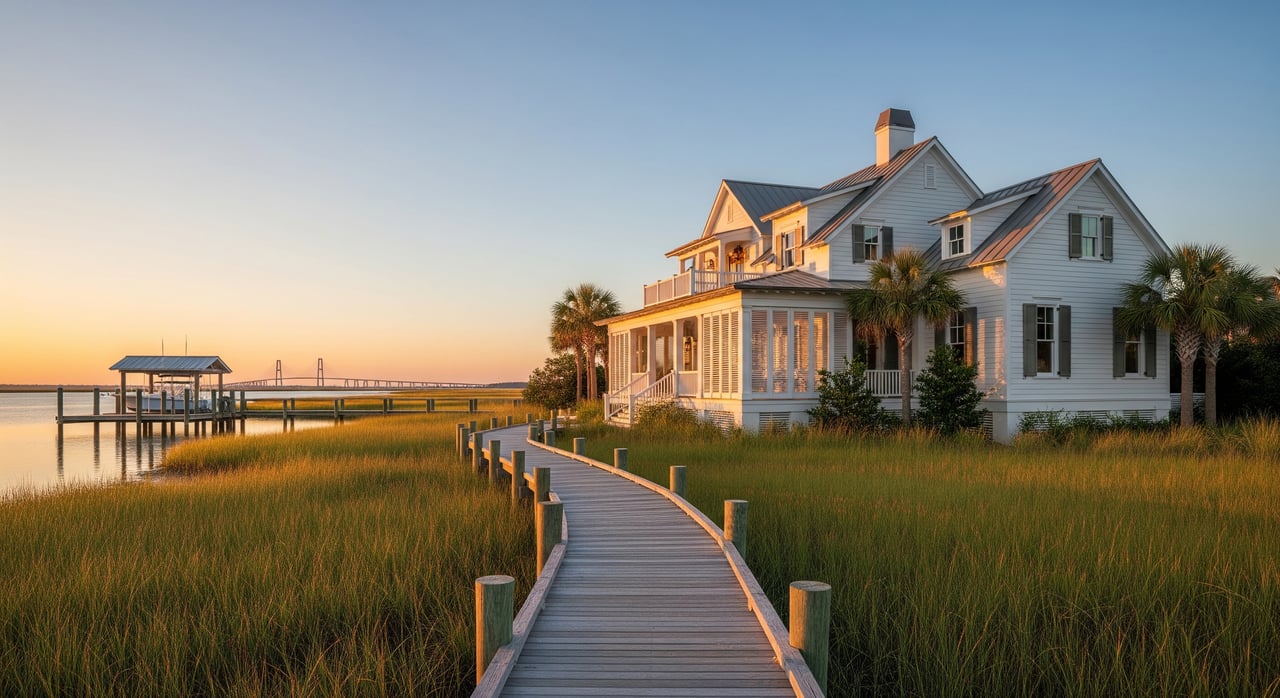
Buying a second home in Mount Pleasant should feel exciting, not overwhelming. You might be picturing weekends on the water, easy access to golf, or a lock-and-leave condo near the beach. The right financing is what makes that vision work in real life. In this guide, you’ll learn the most common loan options, realistic down payments, how discount points work, and the coastal factors lenders look at in Mount Pleasant. Let’s dive in.
Start with how you’ll use the home
Before you compare loans, get clear on how you plan to use the property.
- If you will occupy it seasonally and not rent it most of the year, lenders typically treat it as a second home.
- If you plan short-term rentals, many lenders classify it as an investment property. That usually means a higher down payment and higher rates.
- Check local rules first. Town of Mount Pleasant and Charleston County have specific short-term rental regulations and permits. HOA documents may also limit or prohibit rentals.
Conforming loans: common and cost-effective
Conforming loans follow Fannie Mae and Freddie Mac guidelines and stay within the county’s conforming loan limit set by the FHFA. These loans fit many Mount Pleasant second homes that are not priced in the luxury tier.
- Typical down payment starts around 10 percent for second homes. Some lenders prefer 15 to 20 percent for stronger pricing.
- Lenders often look for credit scores in the 700s for best pricing and ask for several months of reserves.
- Debt-to-income ratio usually needs to stay in the mid-40 percent range. Some lenders allow higher with strong compensating factors.
Tip: Confirm the current Charleston County conforming limit with your lender since limits change each year.
Jumbo loans: for higher-priced coastal homes
If your price point is above the conforming limit, you may need a jumbo loan. This is common for waterfront, marshfront, or luxury community properties in Mount Pleasant.
- Expect larger down payments, often 20 percent or more.
- Many lenders prefer higher credit scores and stronger reserves, sometimes up to 12 to 24 months of principal, interest, taxes, and insurance.
- Rates and guidelines vary by lender and market conditions. Some jumbos price close to conforming; others carry a premium.
Portfolio loans: flexible when life is complex
Portfolio loans are kept by the lender rather than sold on the secondary market. They can be useful if your scenario does not fit standard boxes.
- Good for unique waterfront homes, buyers with complex income, or properties with strong seasonal rental potential.
- You may see higher interest rates and larger down payments compared with conforming or jumbo.
- Underwriting is lender-specific, so flexibility can be higher, but terms vary widely.
Second liens, HELOCs, and bridge loans
You can also layer financing to manage cash and timing.
- HELOC or second mortgage: Use your primary home’s equity to fund part of the down payment or act as a bridge. HELOCs are often variable rate; second mortgages may be fixed at a higher rate.
- Bridge loan: A short-term option to buy before you sell. Costs are higher, but it can help you secure the right property without rushing your sale.
- Lenders qualify you on the combined payments, so make sure the totals fit your debt-to-income ratio and reserve requirements.
Down payments and what to expect
Down payment ranges differ by loan type and use.
- Conforming second home: commonly 10 to 20 percent.
- Jumbo: commonly 20 percent or more.
- Portfolio: often 20 to 30 percent depending on the profile.
- If the property is classified as an investment, many programs require 25 percent or more.
Your total monthly payment must also account for HOA dues, property taxes, homeowner’s insurance, and possibly flood and separate wind or hurricane coverage. These items count toward qualifying.
Should you pay discount points?
Discount points are prepaid interest. One point equals 1 percent of the loan amount and typically lowers your rate. The amount of rate reduction per point varies by lender and market.
- Consider points if you plan to keep the property for several years or need to reduce your monthly payment to qualify.
- Skip points if you expect a short ownership window or want to keep cash for reserves, higher down payment, or insurance escrows.
- Run a breakeven: cost of points divided by monthly savings equals months to recoup. Example: if 1 point costs $5,000 and lowers your payment by $75, your breakeven is about 67 months.
Coastal factors that affect approval
Mount Pleasant is a coastal market. Lenders and insurers will look closely at the following.
Debt-to-income and reserves
- Many lenders prefer total DTI in the mid-40 percent range. Some allow up to 50 percent with strong compensating factors.
- Second homes often require 6 to 12 months of reserves. Jumbo and portfolio loans may require more.
- Higher HOA dues and insurance premiums directly reduce how much you can qualify for.
HOA and condo considerations
- Lenders review HOA budgets, reserves, litigation, insurance, and rental rules. Weak reserves or active litigation can create hurdles.
- HOA dues count in your monthly obligations. Special assessments may need to be paid at closing or factored into reserves.
- Condo projects can have owner-occupancy and project-approval requirements. Check status early with your lender.
Flood, wind, and insurability
- If a property is in a FEMA Special Flood Hazard Area and you have a federally regulated mortgage, flood insurance is required.
- Premiums vary by elevation, construction, and claims history. An elevation certificate and flood map review are common in underwriting.
- Many coastal homes have separate wind or hurricane policies. Some insurers offer credits for wind mitigation features like impact windows or reinforced roof straps.
Appraisal on waterfront and unique homes
- Waterfront and custom properties can lack direct comparables. Appraisals may take longer or come in low.
- Tidal access, bulkheads, shared docks, and elevation can influence value and underwriting.
- Build extra time into your contract for appraisal, HOA review, and insurance binders.
Short-term rental expectations
- If you plan to rent short term, many lenders treat the home as an investment. Down payments and rates are usually higher.
- Seasonal or short-term income is hard to use for qualifying unless you have documented history. Projections are often discounted or not counted.
- Confirm local permits and HOA rules to avoid surprises.
Mount Pleasant specifics to check early
- Verify FEMA flood zone status and obtain an elevation certificate if needed.
- Review Town of Mount Pleasant and Charleston County short-term rental rules and permits.
- Request the HOA resale package, current budget, meeting minutes, insurance, litigation disclosures, and rental restrictions.
- Get early quotes for homeowner’s, wind/hurricane, and flood insurance. Insurability affects closing and monthly payments.
A simple buyer checklist
- Get prequalified with a lender experienced in coastal second homes.
- Confirm the current Charleston County conforming loan limit with your lender.
- Gather reserves documentation, tax returns, and any rental income records.
- Price out total monthly costs, including HOA dues, flood, wind, and property taxes.
- If you are considering points, calculate your breakeven against your expected holding period.
- If you need to buy before you sell, ask about bridge loans or a HELOC strategy.
- For high-value or unique properties, discuss jumbo and portfolio options early.
Why local guidance matters
Every lender prices risk differently, and every property tells a different story. In Mount Pleasant, small details like elevation, HOA strength, or wind mitigation can change your approval and your monthly payment. A tailored lending plan, aligned with your goals for personal use or rentals, helps you avoid costly surprises and win the right home.
Ready to explore second-home options with a local advocate by your side? Reach out to Lisa Nicole Thornton for a personalized game plan and concierge-level coordination from offer to closing.
FAQs
What down payment is typical for a Mount Pleasant second home?
- Conforming second homes often start around 10 to 20 percent down, while many jumbo loans require 20 percent or more and investment classifications often require 25 percent or higher.
How do lenders treat short-term rentals in Mount Pleasant?
- Many lenders classify homes with short-term rentals as investment properties, which usually come with higher down payments, higher rates, and stricter income documentation.
Do I need flood insurance for a Mount Pleasant second home?
- If the property is in a FEMA Special Flood Hazard Area and you use a federally regulated mortgage, flood insurance is required and premiums vary by elevation and construction.
What debt-to-income ratio do lenders allow for second homes?
- Many programs prefer total DTI in the mid-40 percent range, with some allowing up to about 50 percent when there are strong compensating factors.
How many months of reserves should I plan for on a second home?
- Lenders commonly ask for 6 to 12 months of principal, interest, taxes, and insurance, with higher reserves possible for jumbo or portfolio loans.
Can I use FHA or VA for a true second home in Mount Pleasant?
- Generally no, since FHA and VA programs require primary occupancy and are not designed for purely second-home use.
