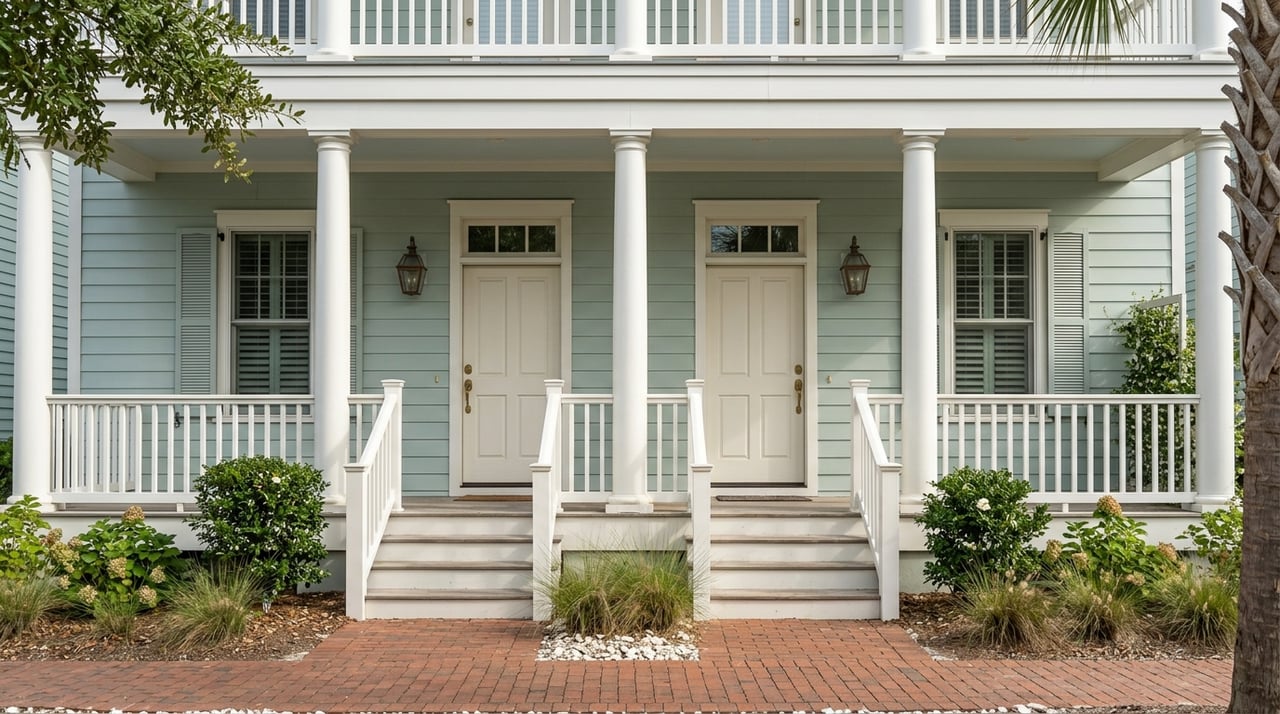
Trying to choose between a townhome and a house in Mount Pleasant? You are not alone. In a market where prices are high and inventory moves with purpose, the right choice often comes down to how you want to live day to day, not just what you can afford on paper. This guide will help you compare cost, upkeep, privacy, outdoor space, taxes, and flood considerations so you can make a confident decision. Let’s dive in.
Mount Pleasant Market Snapshot
Mount Pleasant remains an active, high-cost market, which makes the townhome-versus-house decision especially important. Realtor.com’s April 2026 summary showed 688 homes for sale, a median list price of $995,000, and 37 median days on market. Redfin reported a median sale price of $850,000 over the prior three months, describing the market as somewhat competitive.
Those numbers are best viewed as different snapshots, not direct apples-to-apples comparisons. One reflects listing activity, while the other reflects closed sales. What matters most for you is that both point to the same reality: Mount Pleasant is a place where total monthly cost and long-term fit deserve careful attention.
Local MLS data also shows a clear price gap between attached and detached homes. In Upper Mount Pleasant, April 2026 year-to-date median sales were $902,500 for single-family detached homes and $630,000 for townhouse-condo attached homes. In Lower Mount Pleasant, the medians were $1,235,000 for detached homes and $515,500 for attached homes.
Why Townhomes Appeal in Mount Pleasant
A townhome often gives you a lower entry point into Mount Pleasant. Based on local MLS snapshots, attached homes have sold at meaningfully lower median prices than detached homes in both Upper and Lower Mount Pleasant. For many buyers, that opens the door to ownership in a market that might otherwise feel out of reach.
Townhomes can also support a more convenient, lower-upkeep lifestyle. Fannie Mae describes a townhome as a multi-floor home attached by one or two shared walls, usually with a private entrance and some type of private outdoor patio or deck. Many townhome communities also include shared amenities like a pool, gym, or clubhouse.
In some communities, the homeowners association may handle part or all of the exterior maintenance, depending on the governing documents. That can reduce the number of routine tasks on your personal to-do list. If your schedule is full or you simply want fewer exterior responsibilities, that can be a major plus.
Mount Pleasant’s planning goals also make this option especially practical in certain areas. The town’s comprehensive plan emphasizes mixed-use centers with nearby housing, parks, restaurants, cafes, and walkable connections. If you value being near amenities and want a more lock-and-leave lifestyle, a townhome may be a strong fit.
Townhome Benefits to Weigh
- Lower entry price compared with many detached homes in Mount Pleasant
- Potentially less exterior maintenance, depending on the HOA
- Access to shared amenities in some communities
- Often well suited for convenience-focused living near mixed-use corridors
- Private entrance and usually some private outdoor space, even with attached living
Why a House May Be Worth It
A single-family detached house gives you more separation from neighbors and more control over your property. Fannie Mae defines this property type as a home that stands alone on its own piece of land. That usually means you have more flexibility over the yard, exterior spaces, and how the property functions for your daily life.
That added control often comes with more privacy and more room for yard-oriented living. If you want space for gardening, outdoor entertaining, extra parking flexibility, or simply a little more breathing room, a detached home may line up better with your goals. In Mount Pleasant, that land and privacy premium is often reflected in the price.
The trade-off is maintenance. With a detached home, you are usually responsible for upkeep inside and out. That can include roof condition, gutters, drainage, HVAC filters, pests, appliances, and other routine items that require time, planning, and budget.
House Benefits to Weigh
- More separation from neighboring homes
- More direct control over the lot and exterior
- Better fit for buyers who want more yard space
- Greater flexibility for outdoor living and parking use
- Strong appeal for buyers who value privacy and independence
Compare the Real Monthly Cost
Purchase price matters, but monthly carrying cost tells the more useful story. A lower-priced townhome can still feel expensive if HOA dues are high. A detached house with no HOA may still cost more each month if taxes, insurance, and maintenance are significantly higher.
A smart comparison should include principal, interest, property taxes, homeowners insurance, flood insurance if needed, and HOA dues if applicable. Fannie Mae includes association dues in the monthly housing expense used for debt-to-income calculations. That means HOA dues are not just a side note. They directly affect affordability.
The Consumer Financial Protection Bureau notes that HOA or condo fees are usually paid directly to the association, not to your mortgage servicer. That can catch buyers off guard if they focus only on the mortgage payment. Looking at the full monthly picture helps you avoid that mistake.
Quick Cost Check
When you compare a townhome and a house, ask your lender to break out:
- Principal and interest
- Property taxes
- Homeowners insurance
- Flood insurance, if required or advisable
- HOA dues
- Any expected maintenance differences
HOA Review Matters More Than Many Buyers Expect
If you are considering a townhome, the HOA deserves real attention. HOA dues may cover exterior maintenance, shared amenities, and common areas, but the exact coverage varies by community. You will want to know what the fee includes and what still falls on you.
Fannie Mae recommends reviewing the HOA’s financial statements and reserve fund before buying. Healthy reserves help pay for future repairs and major community expenses. A low monthly fee can look attractive at first, but it may not be a good sign if the reserve fund is thin or major work is coming.
You should also ask whether there have been recent or upcoming special assessments. That gives you a clearer picture of the true ownership cost. In many cases, resale value is tied not only to the home itself but also to the health and management of the community.
Property Taxes Depend on Use, Not Just Type
In South Carolina, property taxes are based on fair market value, assessment ratio, and millage rate. Charleston County notes that a primary legal residence may qualify for the 4% assessment ratio, while other real property is generally assessed at 6%. New owners must apply for the 4% legal residence status.
That is an important point for Mount Pleasant buyers. The tax difference between a townhome and a house is usually driven more by how the property is classified and used than by whether it is attached or detached. If the home will be your primary legal residence, confirm your eligibility and application timing early.
Charleston County also notes that special district millage can affect the final bill. That is another reason to review estimated taxes property by property rather than relying on broad assumptions.
Flood Risk Is Important for Both Options
Flood risk is a key part of buying in Mount Pleasant, whether you choose a townhome or a house. The town identifies two local flooding types: localized flooding caused by blocked or inadequate drainage, and storm surge flooding tied to tropical storms and hurricanes. Coastal high-hazard areas are also part of the conversation in some locations.
The town participates in the National Flood Insurance Program and the Community Rating System, which can help keep flood insurance costs lower. Even so, flood insurance can still be a meaningful part of your monthly budget. It should be reviewed separately from standard homeowners insurance.
Fannie Mae notes that regular homeowners insurance does not include flood insurance. FEMA’s Flood Map Service Center is the official source for flood-hazard maps, and federally backed mortgages generally require flood insurance in Special Flood Hazard Areas. Before you choose between a townhome and a house, review the flood map, ask about drainage, and understand the insurance implications.
How to Match the Home to Your Lifestyle
If your goal is easier upkeep, a lower entry point, and access to amenity-rich areas, a townhome may feel like the better fit. This is especially true if you value convenience and prefer to spend less time managing exterior maintenance. In Mount Pleasant, that kind of lifestyle can align well with the town’s focus on walkable, mixed-use areas.
If your goal is more space, more privacy, and more freedom to use the property your way, a detached house may be the stronger option. You may pay more for that flexibility, but for many buyers, the added control is worth it. This choice often makes sense when outdoor living and separation from neighbors are high priorities.
Neither option is automatically better. The better choice is the one that aligns with your monthly comfort level, your maintenance tolerance, and the way you want to live in Mount Pleasant.
A Simple Decision Checklist
Use these questions to guide your next step:
- Do you want a lower entry price, or are you willing to pay more for land and privacy?
- How much exterior maintenance do you want to handle yourself?
- Would HOA dues feel worthwhile if they reduce upkeep or add amenities?
- How important are private outdoor space and parking flexibility?
- Do you want easier access to walkable amenities and mixed-use areas?
- Will this be your primary legal residence for tax purposes?
- Have you reviewed flood maps, drainage, and insurance costs?
- Have you compared the full monthly cost, not just the purchase price?
A clear answer to those questions often makes the decision much easier.
If you want help comparing specific Mount Pleasant properties side by side, Lisa Nicole Thornton offers personalized guidance with the kind of local, hands-on support that can make this decision feel much more manageable.
FAQs
What is the main difference between a townhome and a house in Mount Pleasant?
- A townhome usually offers a lower entry price and potentially less exterior maintenance, while a detached house usually offers more privacy, more land control, and more yard-oriented living.
Are townhomes cheaper than houses in Mount Pleasant?
- Local MLS snapshots for April 2026 year to date showed lower median sales prices for attached homes than for detached homes in both Upper and Lower Mount Pleasant.
Do Mount Pleasant townhomes always have HOA fees?
- Many townhome communities have HOA dues, and the fee often covers shared spaces, amenities, and sometimes exterior maintenance, but the exact structure depends on the community.
Do property taxes work differently for a townhome versus a house in Charleston County?
- Property taxes are usually affected more by how the property is classified and used, such as primary legal residence status, than by whether the home is attached or detached.
Is flood insurance important for both townhomes and houses in Mount Pleasant?
- Yes. Mount Pleasant faces both localized flooding and storm surge risk, and flood insurance should be reviewed carefully for either property type because standard homeowners insurance does not include it.
What should I review before buying a Mount Pleasant townhome?
- Review what the HOA dues cover, the association’s financial statements and reserve fund, any recent or planned special assessments, the flood map, and the full monthly housing cost.
Who should choose a detached house in Mount Pleasant?
- A detached house often fits buyers who want more privacy, more outdoor space, greater control over the property, and more flexibility for how they use the home and lot.
